A spectacular road is more enjoyable when your shoulders are relaxed, your motorcycle is properly balanced, and your evening clothes are waiting at the hotel rather than strapped to the rear seat. So, do guided tours carry luggage? Often, yes – but the level of service varies considerably, and that difference can shape the entire character of your journey.
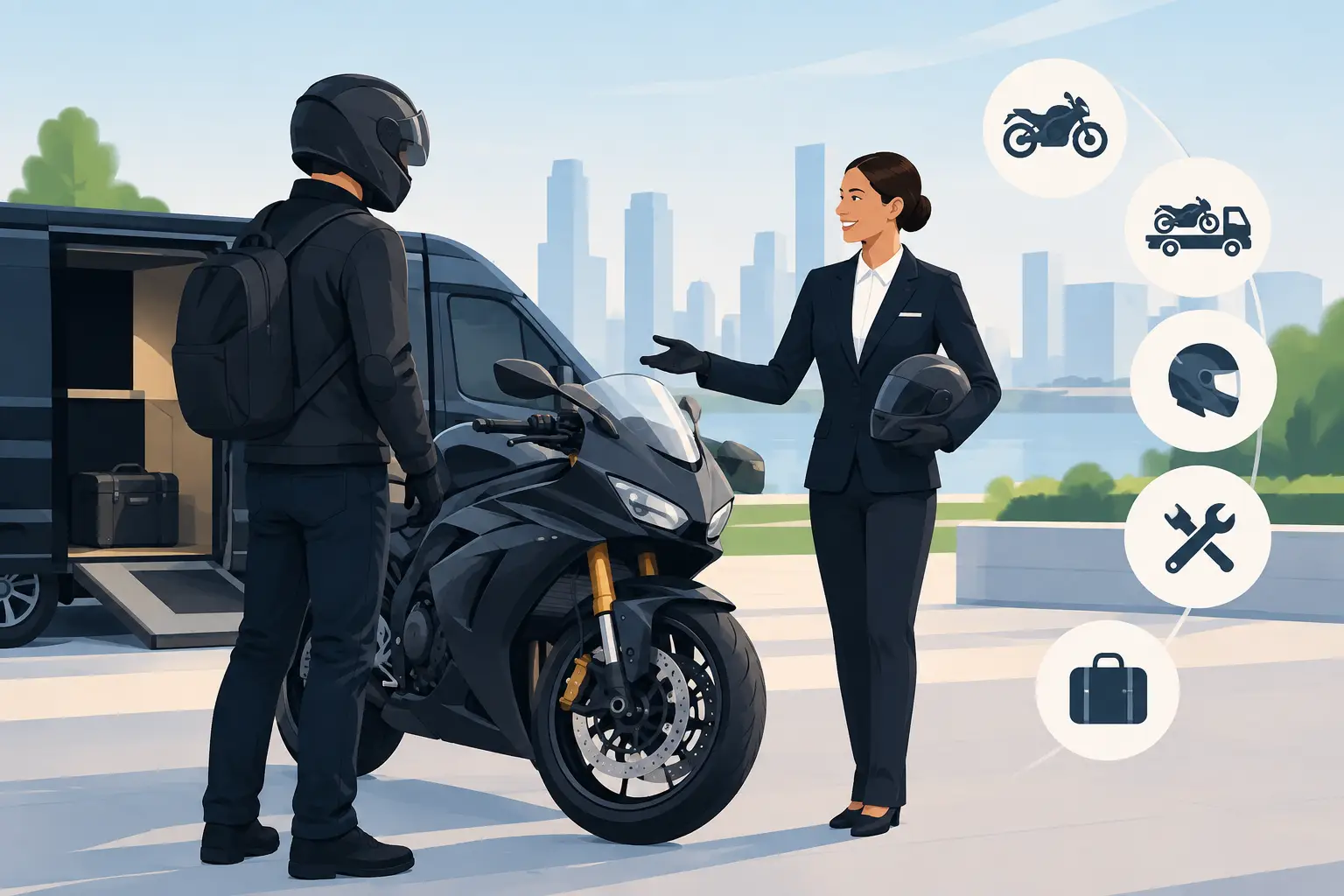
On a thoughtfully supported private motorcycle tour, luggage transport is not an afterthought. It is part of the experience: a support vehicle moves your primary bags between properties while you ride with only what you need for the day. That means you can appreciate a winding mountain pass, an open desert highway, or a stop at a remote overlook without managing the compromises of heavily loaded panniers.
Do Guided Tours Carry Luggage on Every Trip?
Not necessarily. “Guided tour” can describe anything from a small group ride where each guest carries all personal belongings to a fully supported luxury expedition with a dedicated vehicle, guide, mechanical backup, refreshments, and concierge-level logistics. Before reserving a trip, it is worth asking exactly how the operator handles luggage rather than assuming your bags are included.
Some guided motorcycle tours are designed around independent packing. Guests use saddlebags, top cases, duffels, or luggage racks, and bring their belongings into each hotel themselves. This arrangement can suit travelers who prefer a minimalist approach, are comfortable packing light, or are taking a short point-to-point ride.
A premium supported tour works differently. Your main luggage travels in a support vehicle from one carefully selected accommodation to the next. At the end of the riding day, it is delivered or made available at your hotel. You arrive free to settle in, change for dinner, enjoy a cocktail on the terrace, or step straight into a planned activity.
For multi-day travel across the lower 48 states, this distinction matters. Weather can shift dramatically, especially when a route moves between high elevations, coastlines, forests, and desert country. Having your layers, evening attire, additional footwear, and personal items close at hand – without carrying them on the motorcycle – makes the experience far more comfortable.
What Luggage Support Usually Includes
On a well-run private tour, luggage handling begins before the first mile. Your tour team should offer clear guidance on what to bring, how much luggage the support vehicle can accommodate, and whether there are any limits based on the group size, vehicle type, or itinerary. This allows you to pack for the trip you want, not merely for the space available on a motorcycle.
Typically, the support vehicle carries suitcases, garment bags, larger duffels, extra riding layers, casual clothing, and nonessential personal gear. It may also transport bottled water, snacks, first-aid supplies, basic tools, and contingency equipment. For riders using premium rental motorcycles, support service removes the need to fit a week or more of luggage into hard cases that may otherwise be needed for a rain layer, camera, or other daily necessities.
It is sensible to keep a small day bag, tank bag, or compact backpack with you. This should hold essentials that you may need between hotel stops: identification, prescription medication, sunglasses, sunscreen, a phone, charging cable, wallet, and a light layer. If you rely on a particular item throughout the day, it belongs with you rather than in the support vehicle.
The best operators also establish a simple daily rhythm. Before departure, you place your primary bag where the team requests it. By the time you reach your next lodging, it has moved ahead. There is no need to debate how to secure an awkward suitcase to the bike or interrupt a scenic stop because you are worried about unattended gear.
Luggage Handling Is About More Than Convenience
Reduced weight changes the ride itself. Motorcycles handle differently when loaded, particularly through switchbacks, tight parking areas, gravel pullouts, and low-speed hotel approaches. Even experienced riders can appreciate a lighter, more responsive motorcycle when the route includes challenging terrain or long days in changing conditions.
There is also the matter of presentation. A luxury motorcycle journey can include exceptional lodges, private dining, a spa appointment, a helicopter excursion, or an evening in a notable small town. Carrying a change of clothes and personal items is no longer a packing puzzle. Your travel wardrobe can suit both the road and the occasion.
For couples and private groups, support service preserves time together. Instead of distributing bags across several motorcycles, locating lost straps, and unpacking luggage at every overnight stop, guests can focus on the day’s conversation and scenery. The logistics are handled quietly in the background, which is precisely where they belong.
Questions to Ask Before You Book
Luggage transport is easy to promise and easy to misunderstand. A few direct questions will reveal whether the service meets your expectations.
Ask whether a dedicated support vehicle accompanies the tour every day or simply transfers bags between selected hotels. Daily accompaniment provides more flexibility if conditions change, if you need an extra layer, or if an unexpected mechanical concern arises. Ask whether luggage is delivered to your room, held at reception, or available from the vehicle on arrival.
You should also ask about capacity. A private group traveling with full-size suitcases, golf equipment, photography gear, or specialized medical equipment may need a different support arrangement than two riders traveling with soft duffels. A quality operator will discuss this in advance and build the right vehicle plan around your group.
Finally, clarify how valuables are handled. Passports, jewelry, cash, medication, electronics, and irreplaceable documents should generally remain with you or be stored according to an agreed, secure procedure. A support vehicle is designed to make travel easier, but sound travel habits still apply.
How to Pack for a Supported Motorcycle Tour
Luggage support gives you room to pack well, not an excuse to bring everything. The most successful approach is to divide your belongings into three categories: what stays with you on the motorcycle, what you will want upon arriving at the hotel, and what you may need only occasionally.
Your riding essentials should remain accessible. Your hotel bag can contain evening clothes, toiletries, additional shoes, and personal comforts. The final category might include a heavier jacket, spare gloves, a swimsuit, a book, or gear for an optional experience such as fly fishing, rafting, or off-road exploration.
Choose luggage that is easy to load and identify. A structured duffel or medium rolling suitcase is often more practical than several small loose bags. If you are traveling with a partner, coordinating shared items can reduce duplication while still allowing each person a manageable personal bag.
Avoid packing fragile or emotionally irreplaceable belongings in checked or transferred luggage unless you have discussed their handling. The point of professional support is confidence, but a few simple decisions will help ensure that confidence lasts from departure through the final ride.
What About Non-Riders and Autocycle Guests?
Luggage support is equally valuable for guests traveling in an open-air autocycle or joining a private tour as a non-rider. They deserve the same freedom from overpacking a vehicle and the same polished arrival at each destination. A bespoke itinerary should accommodate the needs of every guest, whether they are riding a motorcycle, enjoying a Vanderhall Autocycle, or meeting the group for selected activities.
At Knowwhere Motorcycle Touring, this is the difference between simply taking a guided ride and being genuinely hosted on the road. The support vehicle is there not just to carry bags, but to protect the pace, comfort, and sense of possibility that brought you to the American West or any remarkable route beyond it.
The right question is not only whether a guided tour carries luggage. It is whether its luggage service lets you travel as you intended: lightly on the motorcycle, comfortably at day’s end, and fully present for every extraordinary mile.