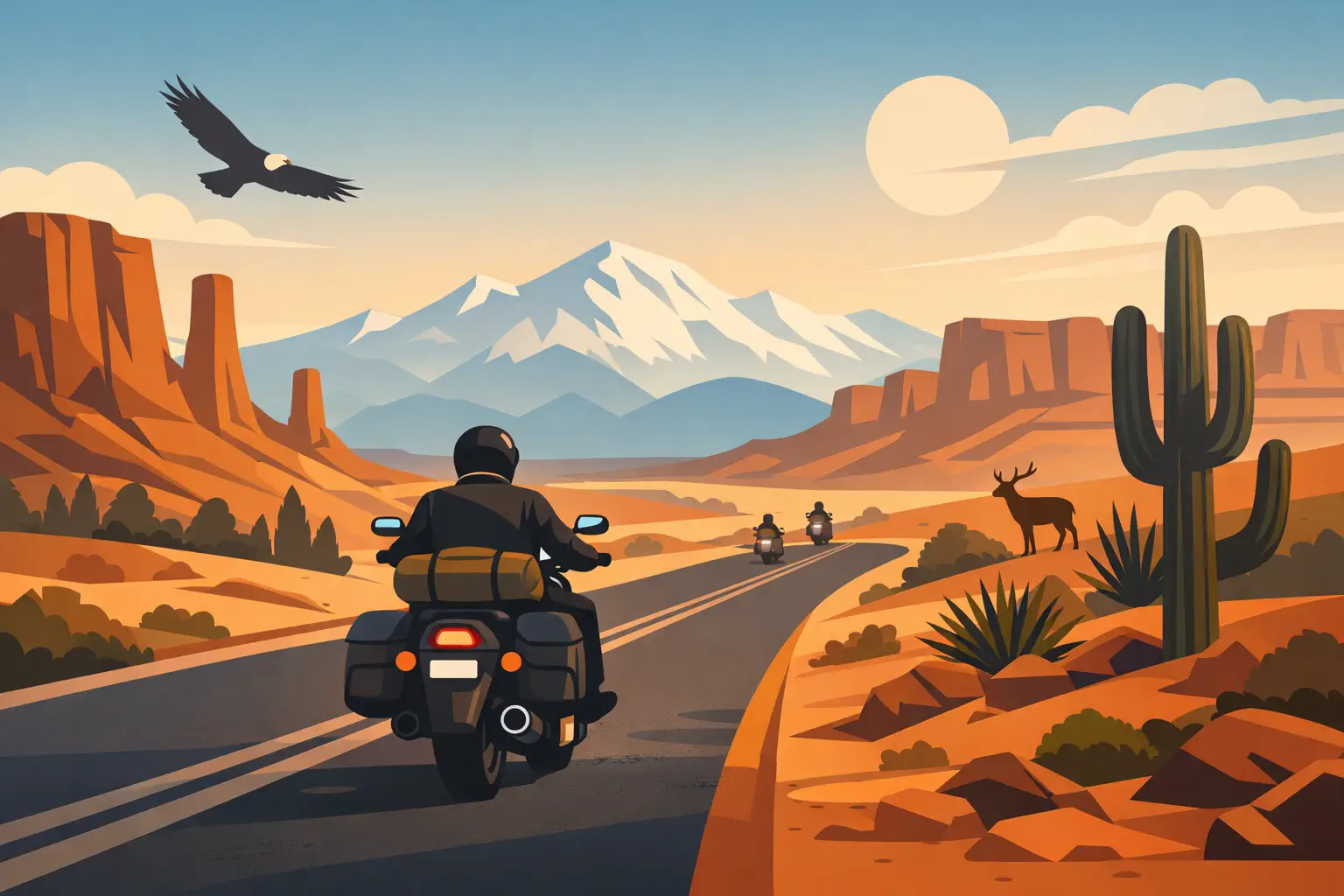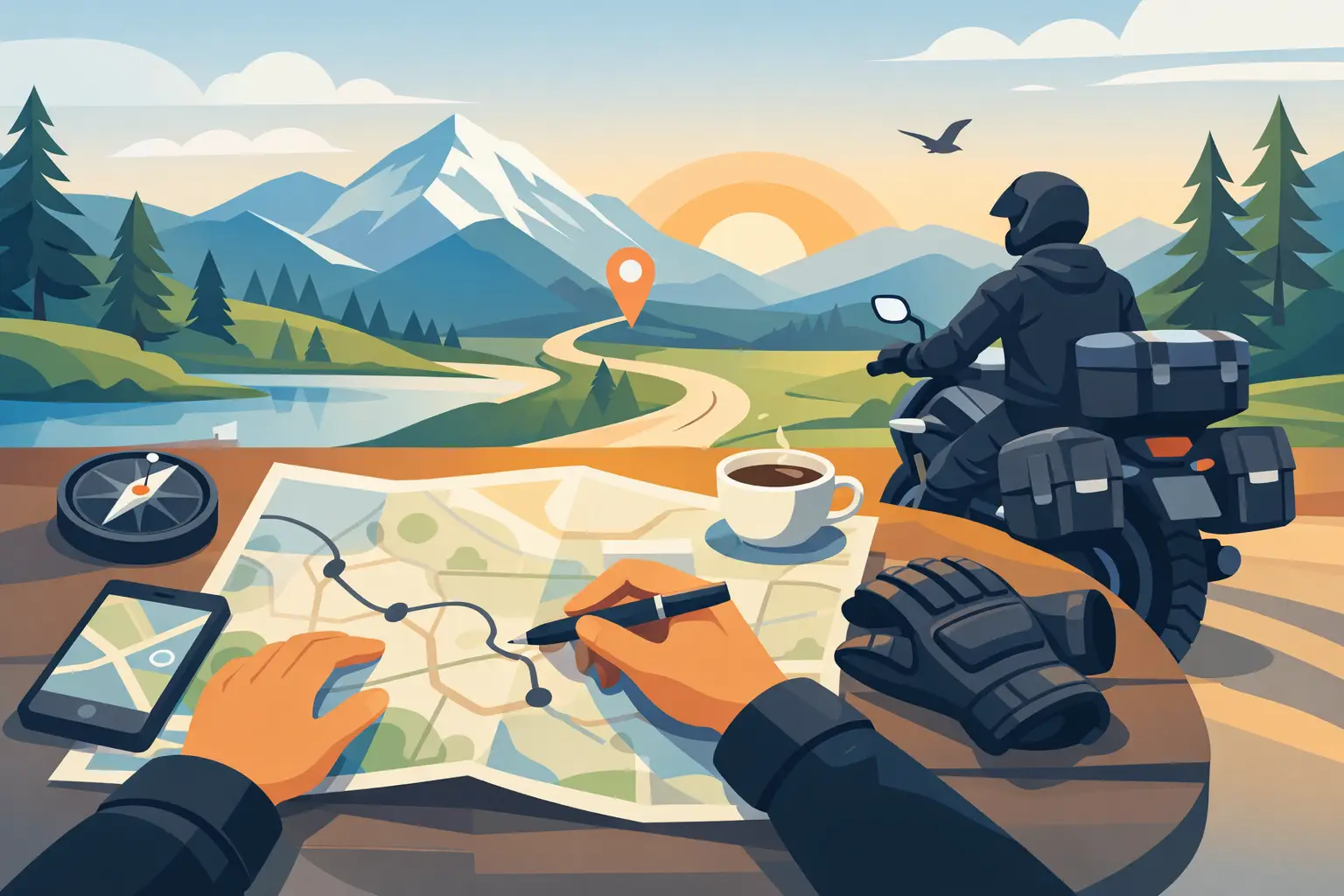
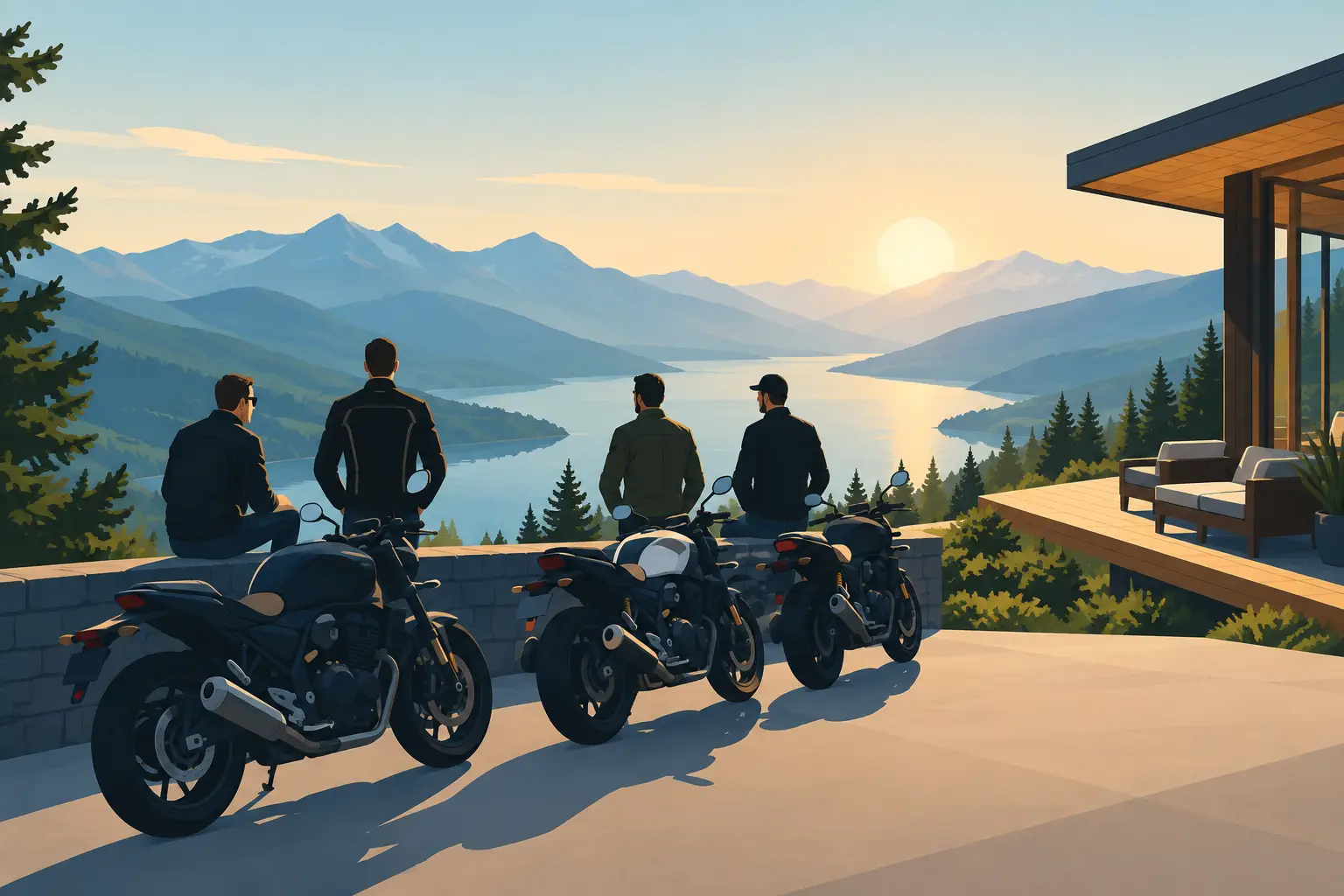
The best decisions are rarely made in a conference room after a fourth presentation. They tend to arrive with space around them: a long horizon, a winding road, a quiet dinner, and the rare freedom to think without being interrupted. Executive motorcycle retreats create that space, pairing the sensory clarity of the open road with private, fully supported travel designed around the people riding it.
For executives, entrepreneurs, leadership teams, and accomplished friends, this is not a standard group motorcycle vacation. It is a considered escape from calendars, obligations, and the constant pressure to be available. The point is not to fill every hour. It is to create a journey with enough structure to feel effortless and enough flexibility to feel genuinely your own.
Why the Road Works for Executive Retreats
Motorcycle travel asks for presence. On a mountain pass, a coastal highway, or a remote stretch of desert pavement, the rider is engaged with the moment in a way that is increasingly rare in professional life. There is no room for a dozen open browser tabs or a stream of notifications. The road narrows attention to what is directly ahead, while the landscape restores a sense of scale.
That combination can be remarkably productive. A leadership team may find that a difficult conversation becomes more candid after a day of shared riding. A founder may rediscover perspective after several hours away from the routines that usually define their thinking. Couples and private groups often experience something simpler but just as valuable: unhurried time together without the burden of managing the trip.
The motorcycle itself matters, but it is not the entire point. Some guests are lifelong riders who want exceptional roads without the usual planning and logistics. Others prefer the open-air character of a Vanderhall Autocycle, or participate as non-riding companions through a tailored mix of scenic drives, spa time, private excursions, and distinctive regional experiences. A well-designed retreat makes room for both.
What Separates a Retreat From a Motorcycle Tour
A retreat has an intention. It may be personal renewal, a milestone birthday, a quiet incentive experience for a leadership group, or simply a private expedition with people whose company matters. That intention should shape the itinerary from the beginning.
A generic tour follows a fixed schedule designed to serve the average rider. An executive retreat should work differently. One group may prefer full days of technical riding and memorable high-elevation roads, followed by a superb meal and a secluded property. Another may want shorter riding days that leave time for fly fishing, a helicopter flight, a guided off-road excursion, or a long afternoon at the spa. Neither approach is better. The right pace depends on the group, riding confidence, season, and appetite for activity.
Privacy is equally important. For many high-achieving travelers, the greatest luxury is not excess for its own sake. It is the ability to travel without adapting to strangers’ preferences, waiting on a large group, or explaining why the day needs to change. A private retreat allows the experience to move at your pace.
The Luxury Is in What You Do Not Have to Manage
Remote roads and celebrated landscapes can make for extraordinary riding, but they also introduce friction. Weather changes quickly in mountain country. Fuel stops may be far apart. The best lodging is not always obvious, and a beautiful route can become exhausting when it is poorly paced. For an executive traveler, spending valuable time researching each detail is usually the opposite of a retreat.
A professionally hosted motorcycle journey removes that operational load. Premium motorcycle rentals can be arranged, or a guest’s own bike can be shipped to the starting point. Luggage travels in a dedicated support vehicle rather than on the motorcycle. Guides lead the route, manage timing, and share the kind of local knowledge that turns an overlook into an experience with context. Snacks, beverages, mechanical support, and thoughtful accommodations are handled before the first mile begins.
That support vehicle is especially meaningful on a multi-day ride. It provides a place for extra layers, cameras, personal items, and luggage, while offering reassurance when traveling through remote country. It also allows the rider to arrive at a refined hotel, lodge, or resort without having spent the day packing, unpacking, and carrying everything needed for the week.
This is not about insulating guests from adventure. It is about preserving the parts that matter: the road, the scenery, the shared experience, and the feeling of moving through a place with confidence.
Designing Executive Motorcycle Retreats Around the Group
The strongest itineraries begin with a conversation rather than a preset route. The essential questions are practical, but they reveal the character of the trip. How many hours a day does the group genuinely want to ride? Are guests seeking smooth scenic pavement, dramatic switchbacks, or a balanced mix? Is the trip centered on a leadership objective, a celebration, or pure exploration? What does a perfect evening look like after a day on the road?
From there, the itinerary can be shaped around the right rhythm. In the lower 48, that may mean tracing blue-ridge ridgelines, crossing high desert, riding through national park country, following the Pacific coast, or linking historic towns and mountain communities. The destination should serve the experience, not the other way around.
A private group of experienced riders might choose a more ambitious route with several memorable riding days and select activity stops. A mixed group may benefit from a hub-and-spoke itinerary, where riders depart each morning from one exceptional property and non-riders enjoy curated alternatives nearby. That format keeps everyone connected without requiring every guest to experience the day in exactly the same way.
There is also value in leaving margin. A schedule packed with scenic stops can paradoxically prevent guests from enjoying any of them. A private retreat should have room for a spontaneous photograph, a longer lunch, a change in weather, or the decision to take the more interesting road simply because it feels right.
The Role of Comfort, Safety, and Discretion
Luxury in motorcycle travel is not only about accommodations. It is about being looked after with quiet competence. Guests should feel that the route, equipment, weather patterns, and daily timing have been anticipated without being overmanaged.
This begins with selecting motorcycles suited to the rider and terrain, not just visually impressive machines. It includes proper gear guidance, realistic daily mileage, and a guide who understands when to adjust the plan. It continues at the end of the riding day, when a well-chosen property, a relaxed meal, and the absence of logistical chores allow guests to recover fully for tomorrow.
Discretion deserves equal attention. Executive groups may want private conversation without a formal agenda. They may need time for a confidential call, prefer low-profile lodging arrangements, or simply want to travel without becoming part of a public group experience. A bespoke operator can accommodate those details naturally, without turning the journey into something overly programmed.
At Knowwhere Motorcycle Touring, the approach is built around this kind of personal hosting: exclusive private travel, concierge planning, expert guidance, and full support that lets the journey feel expansive rather than complicated.
When a Motorcycle Retreat Is the Right Choice
An executive motorcycle retreat is particularly well suited to people who are tired of passive luxury. A beach resort can be restorative, but it does not always create the shared momentum of traveling through extraordinary country under your own control. A conventional corporate retreat can produce useful meetings, but it may not create the openness that comes from leaving familiar surroundings behind.
There are trade-offs. Motorcycle travel requires a degree of physical engagement, and weather can influence a route even with excellent planning. Guests who want uninterrupted indoor comfort or who dislike variable conditions may prefer a different kind of escape. But for travelers who value motion, scenery, privacy, and the satisfaction of a day well spent, those variables are part of the appeal.
The ideal retreat does not force transformation or manufacture a breakthrough. It provides the conditions in which perspective has room to return. Choose the right companions, the right roads, and a team capable of handling every detail behind the scenes. Then let the miles do what they do best: make space for what deserves your full attention.